 blog
blog
Biofeedback Therapy vs Meditation for Anxiety
Table of Contents
- What Biofeedback Therapy and Meditation Are
- How Biofeedback Works to Reduce Anxiety
- How Meditation Helps Calm Your Nervous System
- Breathing Exercises for Anxiety: A Bridge Between Both Approaches
- Key Differences: Time, Access, Equipment, and Cost
- Combining Biofeedback and Meditation for Anxiety Management
- Choosing Your Approach: Which Works Best for Your Anxiety Symptoms
- Conclusion
- Frequently Asked Questions
Last Updated: October 10, 2026
What Biofeedback Therapy and Meditation Are
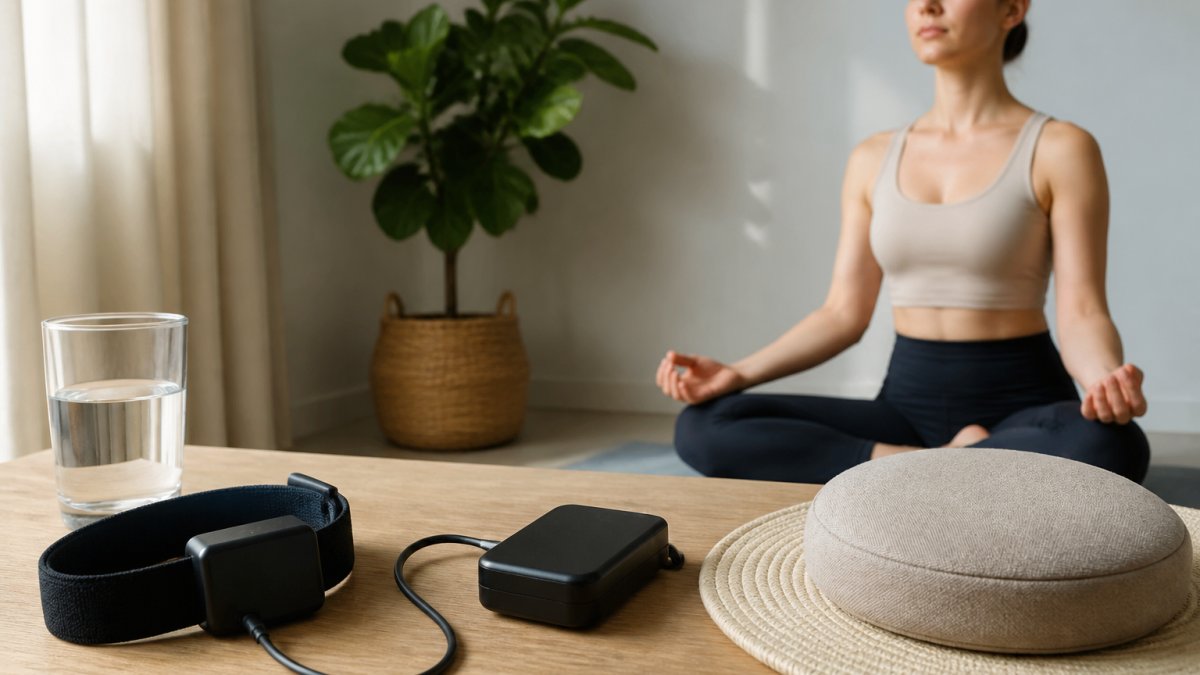
Biofeedback therapy is a mind-body technique that uses sensors to measure your body's physical responses, like heart rate, breathing patterns, and muscle tension, and displays that data in real time so you can learn to control these responses. Meditation is a mental practice where you focus your attention inward, often on your breath or a specific thought, to calm your mind and reduce stress.
Both work with your nervous system to help you recognize anxiety and shift out of stress. Biofeedback uses technology and immediate feedback; meditation relies on your own awareness and mental focus.
When considering biofeedback therapy vs meditation for anxiety, remember that anxiety shows up differently in every person, some feel a racing heart first, others notice tight shoulders or shallow breathing. Having multiple tools gives you real options to find what works best for your nervous system.
Both have strong research support and can reduce anxiety symptoms when practiced consistently. The choice depends on your personal preference, lifestyle, and how your body responds.
How Biofeedback Works to Reduce Anxiety
Biofeedback makes the invisible visible. Sensors measure your heart rate, skin temperature, breathing depth, and muscle tension, displaying them on a screen in real time.
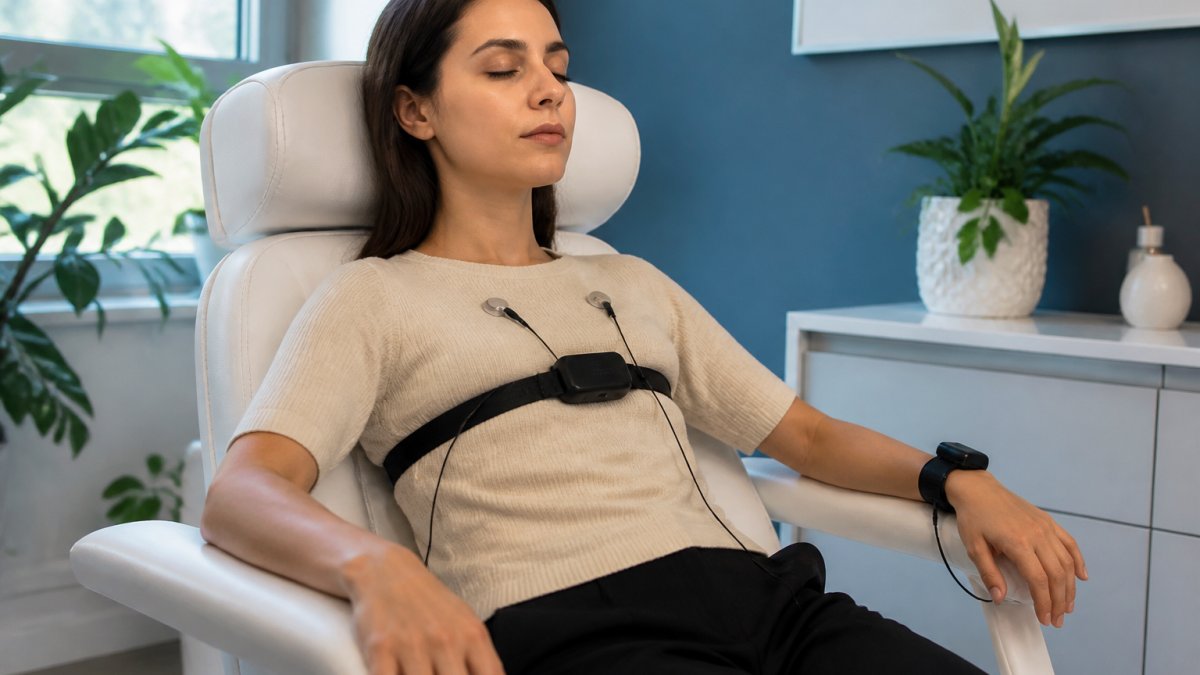
You see your heart rate spike during stress, your breathing shallow, your muscles tense.
How Your Nervous System Learns
Biofeedback works through operant conditioning. That concrete reward reinforces the behavior, and over time your body produces calm states more reliably, even without the device.
With biofeedback, learning happens faster because your brain gets instant confirmation that your technique works, unlike meditation where feedback is internal and delayed.
Types of Biofeedback for Anxiety
Different biofeedback modalities target different anxiety responses:
- Heart rate variability (HRV) biofeedback: Measures the variation between heartbeats. Training increases HRV, which correlates with better stress resilience and emotional regulation. This is one of the most researched forms for anxiety.
- Electromyography (EMG) biofeedback: Measures muscle tension, particularly in the jaw, shoulders, and forehead. Helps people with tension-based anxiety recognize and release muscle holding patterns.
- Skin conductance biofeedback: Tracks sweat gland activity, which rises during stress. Useful for people whose anxiety manifests as sweating or feeling "on edge."
- Respiratory biofeedback: Guides you to slower, deeper breathing patterns (often 5-6 breaths per minute) while showing real-time feedback. Directly activates the parasympathetic nervous system.
- Temperature biofeedback: Measures skin temperature, which drops during stress and rises during relaxation. Less common but useful for people with anxiety-related circulation issues.
What the Research Shows
Meta-analyses show biofeedback is effective for anxiety, particularly HRV and EMG biofeedback, with effect sizes comparable to other behavioral interventions (pubmed.ncbi.nlm.nih.gov). Most studies involved 8-12 sessions, indicating that commitment to multiple sessions is necessary for meaningful results.
Biofeedback is most effective when combined with instruction on relaxation techniques or breathing strategies. The device teaches you how to reduce anxiety, not reduce it passively.
Sessions and Timeline
Sessions typically last 30 to 60 minutes, with a trained therapist guiding you through relaxation or breathing techniques while you watch the feedback. Most people see noticeable progress within 6 to 10 sessions; consistency is key.
How Meditation Helps Calm Your Nervous System
Meditation uses your own attention instead of external sensors. You sit quietly, focus on your breath, and notice what arises without judgment. When your attention wanders, you gently bring it back.
This simple practice activates your parasympathetic nervous system, your body's "rest and digest" response. Your heart rate slows, blood pressure drops, muscles relax, and mind settles.
Meditation requires no equipment and works anywhere, home, work, car, or plane. A basic session takes 10 to 20 minutes, and many people practice daily.
Benefits build over time. Regular meditators report lower baseline anxiety and feel calmer throughout the day. They develop better emotional regulation, noticing anxious thoughts without being swept away by them.
Breathing Exercises for Anxiety: A Bridge Between Both Approaches
Breathing is where the two approaches in biofeedback therapy vs meditation for anxiety overlap. Both use controlled breathing as a core tool. But they approach it differently.
In meditation, you breathe naturally and notice your breath without forcing anything. You simply return your attention to the sensation of air moving in and out, building awareness and calm.
In biofeedback, your breathing is measured on screen. A therapist guides you to breathe more slowly (perhaps 6 breaths per minute instead of 12 to 16), and the sensor shows you exactly when you're hitting that target. This precision helps your nervous system learn faster.
Here are common breathing techniques used in both:
- 4-7-8 breathing: Breathe in for 4 counts, hold for 7, exhale for 8. This activates your parasympathetic nervous system.
- Box breathing: Inhale for 4 counts, hold for 4, exhale for 4, hold for 4. Used by military and first responders for stress control.
- Diaphragmatic breathing: Breathe deeply into your belly instead of your chest. Slows your heart rate and reduces muscle tension.
- Extended exhale: Make your exhale longer than your inhale. Signals safety to your nervous system.
Start with one breathing technique and practice for 2 weeks before switching; your body learns patterns through repetition.
Key Differences: Time, Access, Equipment, and Cost
Both approaches reduce anxiety, but they differ in practical ways. Here's what matters when you're choosing:
| Factor | Biofeedback Therapy | Meditation |
|---|---|---|
| Equipment needed | Sensors, monitor, trained therapist | None, just you |
| Session length | 30-60 minutes | 5-20 minutes |
| Where you do it | Clinical setting with equipment | Anywhere, home, work, outdoors |
| Learning curve | Faster, immediate feedback | Slower, builds over weeks |
| Consistency required | 8-10 sessions for results | Daily practice for best results |
| Access | Requires finding a trained provider | Free, start anytime |
| Feedback type | External (device shows your data) | Internal (you notice your own shifts) |
Biofeedback works best if you want measurable progress quickly; meditation works best if you want a free, portable tool you can use daily.
Some people use both: biofeedback sessions to train their nervous system, then meditation at home to reinforce what they learned.
Combining Biofeedback and Meditation for Anxiety Management
The most effective approach for many people combines both: biofeedback teaches your nervous system what calm feels like, and meditation teaches your mind to access it independently.
In a combined approach: start with 6 to 8 biofeedback sessions to establish baseline awareness, learn breathing and relaxation techniques, practice them daily through meditation at home, and return for occasional tune-up sessions to track progress.
This combination provides structure and expert guidance from biofeedback, plus a free, portable tool you control through meditation.
At Wellness Oasis, we use the Oberon Biofeedback frequency system to create personalized wellness plans.
Many clients find biofeedback accelerates their results; once they understand their body's response, daily meditation becomes more effective.
Choosing Your Approach: Which Works Best for Your Anxiety Symptoms
Your anxiety symptoms and personal circumstances determine which approach works best. Understanding the evidence helps you set realistic expectations.
Choose biofeedback if:
- Your anxiety shows up physically first (racing heart, tight chest, sweaty palms, muscle tension)
- You want measurable progress and concrete feedback
- You respond well to technology and data
- You have limited time and want faster results (6-10 weeks versus months of daily meditation)
- You've tried meditation and it didn't click for you
- You want a therapist to help you understand your specific anxiety patterns
Choose meditation if:
- Your anxiety lives mostly in your mind (racing thoughts, worry loops, catastrophizing, rumination)
- You prefer a free, accessible tool you control
- You want to build long-term emotional resilience and emotional regulation
- You have time to practice daily (10-20 minutes)
- You like the idea of a portable practice you can use anywhere
- You prefer not to rely on equipment or a therapist's involvement
Choose both if:
- Your anxiety has both physical and mental components
- You want to accelerate your results
- You're willing to invest in structured sessions plus daily practice
- You want to understand your body's patterns and then manage them independently
What the Evidence Actually Shows
Biofeedback shows faster measurable changes in heart rate and muscle tension within 4-6 weeks, most effective for physical anxiety symptoms. Meditation builds cumulative resilience over months, more effective for anxiety-driven thoughts. Combined approaches show the strongest outcomes because biofeedback teaches you what calm feels like, and meditation teaches you how to access it independently.
Realistic Limitations and When to Seek Professional Care
Neither biofeedback nor meditation is a replacement for professional mental health care if you have:
- Severe anxiety that interferes with daily functioning
- Panic disorder with frequent panic attacks
- Generalized anxiety disorder that hasn't improved with self-help approaches
- Anxiety linked to trauma or PTSD
- Anxiety accompanied by depression or suicidal thoughts
In these cases, a licensed therapist or psychiatrist should be your first step. Biofeedback and meditation can complement professional care, but they should not replace it.
Biofeedback requires finding a trained provider, which can be difficult depending on location. Meditation requires consistent daily practice, which many people struggle to maintain.
Start by Noticing Where Your Anxiety Lives
Does it start in your body or your mind? If it starts in your body, you feel your heart racing or your chest tightening before you notice anxious thoughts, biofeedback often works faster because it teaches you to recognize and interrupt that physical response immediately.
Try meditation first, it's free, requires no equipment, and you can start today. If after 4-6 weeks you're not seeing progress or want faster results, consider adding biofeedback sessions.
Conclusion
Biofeedback therapy and meditation are both effective tools for managing anxiety. Biofeedback uses real-time data from your body to teach your nervous system how to shift out of stress. Meditation teaches your mind to observe anxiety without being controlled by it. The best choice depends on where your anxiety lives, in your body, your mind, or both.
Many people find that combining both approaches gives them the fastest, most lasting results. At Wellness Oasis, we help you identify which approach fits your anxiety pattern and create a personalized plan that works for your lifestyle. Our team uses advanced biofeedback technology alongside proven wellness modalities to help you regain control of your nervous system. Contact us today to explore which approach, or combination, will help you find calm and confidence.
Frequently Asked Questions
Is biofeedback therapy actually effective for anxiety, or is it just a wellness trend?
Biofeedback therapy works by giving you real-time data about your body's stress responses, like heart rate and muscle tension. This feedback helps you learn to control physiological signals that fuel anxiety. Research supports its use for anxiety management, though effectiveness varies by individual. The key is consistent practice and working with a qualified practitioner who can teach you to interpret the feedback and apply it to real-world situations.
Can I use meditation and biofeedback together for anxiety?
Yes, combining meditation and biofeedback can be powerful. Meditation builds self-regulation and calmness, while biofeedback provides objective data about your progress. Many people use biofeedback during meditation to see exactly how their nervous system responds, then apply those insights to their daily meditation practice. This combination addresses both the mental and physiological sides of anxiety.
How quickly would I see results from biofeedback therapy or meditation for anxiety?
Results depend on your starting point and consistency. Some people notice calmer breathing or lower heart rate within the first few sessions of biofeedback. Meditation typically requires 2-4 weeks of regular practice before noticeable shifts in mood and anxiety. Both approaches work best with ongoing practice rather than one-time sessions. Tracking your progress over weeks and months shows the real benefits.
What is the difference between how biofeedback and meditation calm your nervous system?
Meditation calms your nervous system through focused attention, breathing, and mental training that naturally activate your parasympathetic (rest-and-digest) response. Biofeedback does this by showing you real-time data about your heart rate, muscle tension, and brain activity, teaching your body to self-regulate those signals directly. Meditation is internal and awareness-based; biofeedback is external and data-driven. Both shift your nervous system toward relaxation, just through different pathways.