 ultimate-guide
Hyperbaric Oxygen Therapy: A Complete 2026 Guide
Table of Contents
- What Is Hyperbaric Oxygen Therapy and How It Works
- Approved Indications and Conditions Treated
- Hyperbaric Oxygen Therapy Benefits for Wound Healing
- What to Expect During a Hyperbaric Oxygen Therapy Session
- Hyperbaric Oxygen Therapy Risks and Side Effects
- Hyperbaric Oxygen Therapy Contraindications and Who Should Avoid It
- Treatment Course and How Progress Is Assessed
- Evidence Quality and Non-Approved Uses
- Frequently Asked Questions
Last Updated: October 6, 2026
What Is Hyperbaric Oxygen Therapy and How It Works
Hyperbaric oxygen therapy is a medical treatment in which patients breathe pure oxygen inside a pressurized chamber at greater than atmospheric pressure.
The principle is straightforward: higher pressure forces more oxygen molecules into your blood plasma and tissues.
At Wellness Oasis, we understand that hyperbaric oxygen therapy benefits extend across multiple healing pathways.
Inside the Hyperbaric Chamber
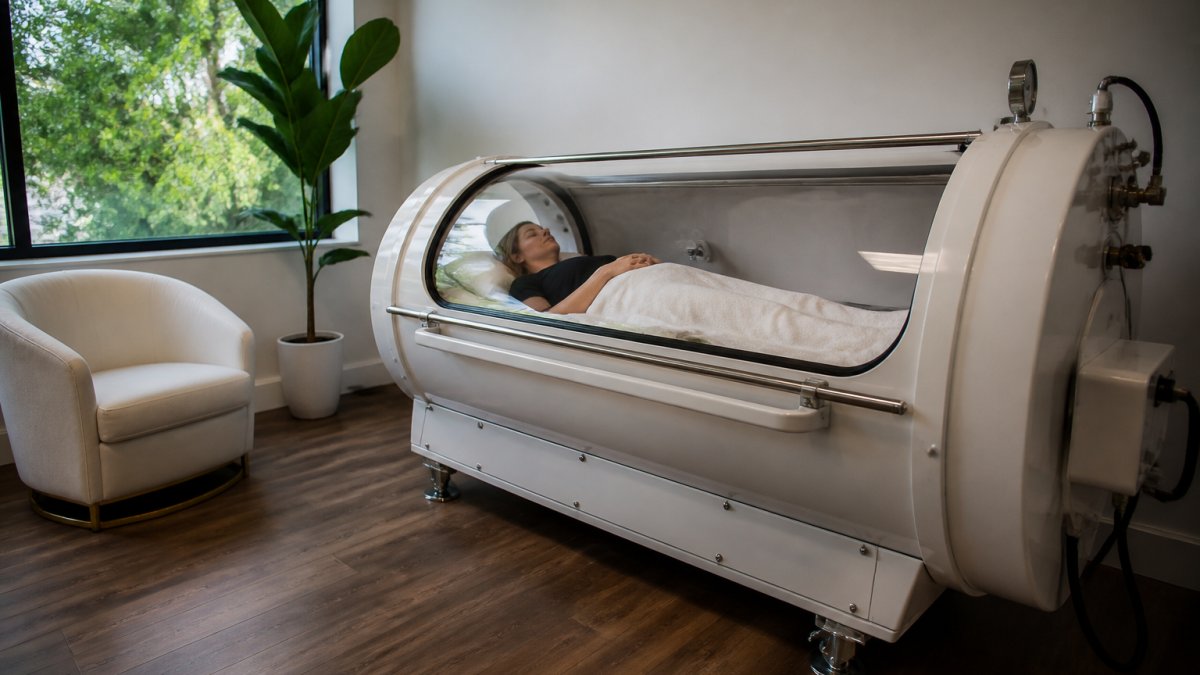
A hyperbaric chamber is typically a clear acrylic tube or a larger multiplace steel chamber built to safely contain pressurized oxygen.
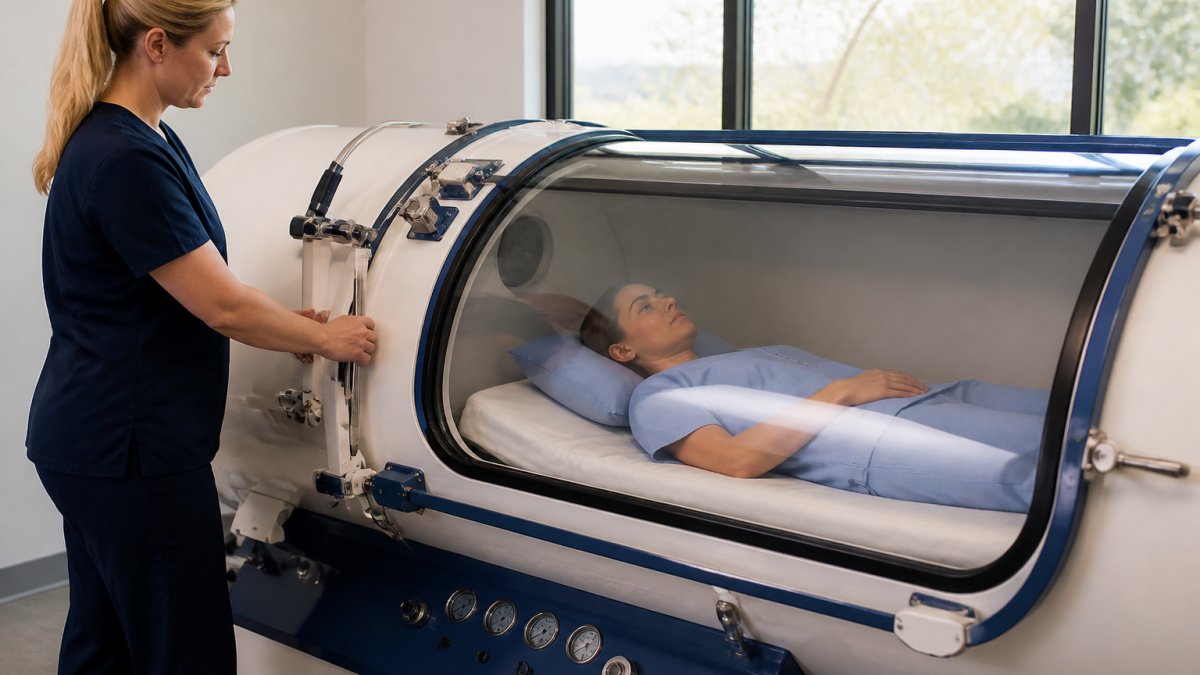
Inside, you sit or recline comfortably as pressure gradually increases over 10-15 minutes.
Oxygen Delivery Under Increased Pressure
The mechanism behind hyperbaric oxygen therapy combines basic physics and biology.
At two atmospheres, blood carries roughly twice as much dissolved oxygen; at three, three times as much.
Under hyperbaric conditions, plasma becomes the primary oxygen carrier. Unlike hemoglobin, which has a fixed capacity, plasma dissolves additional oxygen as pressure rises, which is why hyperbaric oxygen therapy reaches tissues normal circulation cannot adequately supply.
Approved Indications and Conditions Treated
The FDA has approved hyperbaric oxygen therapy for conditions where evidence shows clear benefit: air or gas embolism, decompression sickness (the bends), gas gangrene, crush injuries and compartment syndrome, acute peripheral ischemia, radiation injury to tissue, diabetic wounds of the lower extremities, and certain chronic osteomyelitis.
For air embolism and decompression sickness, hyperbaric oxygen therapy is often a medical emergency.
Gas gangrene, caused by Clostridium bacteria, progresses rapidly and threatens limb loss or death.
Crush injuries and compartment syndrome starve tissue of oxygen despite seemingly adequate circulation. Hyperbaric oxygen therapy helps tissue survive the initial injury and recover during the critical healing window.
Hyperbaric Oxygen Therapy Benefits for Wound Healing
The most common use of hyperbaric oxygen therapy in civilian medicine involves wound healing. Chronic wounds that resist conventional treatment often respond dramatically to hyperbaric oxygen therapy because the underlying problem is frequently tissue oxygen deprivation.
Chronic and Non-Healing Wounds
Chronic wounds, those unhealed after 12 weeks, affect millions of people (Human Wound and Its Burden: Updated 2022 Compendium of Estimates).
Hyperbaric oxygen therapy addresses this root cause directly. By raising dissolved oxygen in blood and tissues, it supports fibroblast activity (collagen-producing cells), angiogenesis (new blood vessel formation), and immune function.
Tissue Repair and Inflammation Reduction
Inflammation is normal in healing, but chronic inflammation impedes recovery. Hyperbaric oxygen therapy modulates the inflammatory response by increasing tissue oxygen and supporting the shift from inflammation to tissue remodeling.
The therapy also stimulates growth factors and collagen, both essential for tissue repair. Fibroblasts, the cells that build structural proteins, work better in an oxygen-rich environment, which is why hyperbaric oxygen therapy benefits extend to diverse wound types.
What to Expect During a Hyperbaric Oxygen Therapy Session
Understanding the treatment experience helps patients prepare mentally and physically. Each session follows a predictable structure, though individual responses vary.
Before Your Treatment
Before your first session, a qualified provider conducts a medical evaluation, screening for contraindications and reviewing your history, since certain medications and conditions require special consideration. Your provider will explain what to expect and answer questions about hyperbaric oxygen therapy risks and benefits.
On treatment days, arrive 15 minutes early and wear loose natural-fiber clothing, cotton is ideal. Avoid petroleum-based skin products, which are fire hazards in an oxygen-rich environment, and remove jewelry, hearing aids, and electronics before entering.
During and After Treatment
The chamber seals and pressurization begins.
Once pressurized, you breathe oxygen through a mask or hood in a comfortable, climate-controlled environment. Many patients rest, read, or listen to music during the 90-120 minute session.
Depressurization occurs gradually over 10-15 minutes, preventing discomfort and letting your body readjust. Afterward, most patients resume normal activities immediately, though some report mild fatigue during their first few sessions.
Hyperbaric Oxygen Therapy Risks and Side Effects
Like any medical treatment, hyperbaric oxygen therapy carries potential risks that deserve honest discussion.
The most common side effect is barotrauma, pressure injury to air-filled spaces.
Oxygen toxicity can develop with prolonged high-pressure oxygen exposure, causing vision changes, nausea, twitching, and in severe cases seizures.
Myopia (temporary nearsightedness) from lens swelling occurs in some patients and typically resolves within weeks after treatment.
Hyperbaric Oxygen Therapy Contraindications and Who Should Avoid It
Certain conditions make hyperbaric oxygen therapy inappropriate or dangerous.
A history of thoracic surgery, bleomycin chemotherapy, or certain medications may increase risk, and uncontrolled seizure disorders require careful evaluation.
Upper respiratory infections or sinus congestion make equalization difficult and raise barotrauma risk, so most providers recommend postponing until the infection clears.
Treatment Course and How Progress Is Assessed
There is no single hyperbaric oxygen therapy schedule. The number of sessions, the pressure used, and the way progress is judged all depend on the condition being treated, the clinician's protocol, and how your body responds. Anyone who quotes one universal number is oversimplifying.
How Protocols Vary by Condition
A common pattern is that acute, emergency indications are treated aggressively and briefly, while chronic conditions are treated in longer planned courses:
- Decompression sickness and air embolism: Often a single urgent treatment, sometimes repeated over hours or a day or two, with pressure and duration chosen by the treating physician based on symptom response.
- Diabetic foot ulcers and other chronic wounds: Typically a planned course of roughly 20 to 40 sessions, often five days per week, with reassessment partway through to decide whether to continue.
- Radiation tissue injury: Frequently a longer course, since damaged tissue recovers slowly and may need 30 or more sessions.
Session length commonly runs about 90 to 120 minutes at pressure, plus the time to pressurize and depressurize. Pressure is usually set between about 2.0 and 3.0 atmospheres, but the exact figure is a clinical decision, not a fixed rule.
How Progress Is Actually Measured
Progress assessment is condition-specific and should be defined before treatment starts:
- Wounds: Providers track wound surface area, depth, and appearance, often using serial photographs and a measuring grid. A reduction in wound size over a set number of sessions is a common checkpoint for deciding whether to continue.
- Infections such as gas gangrene or osteomyelitis: Assessment leans on clinical signs, imaging, and lab markers alongside the surgical and antibiotic plan.
- Crush injuries and flaps or grafts at risk: Providers watch tissue color, perfusion, and viability, and may use imaging to judge whether tissue is being salvaged.
Why Consistency Matters
Most patients begin noticing change within the first 10 to 15 sessions, but some conditions only show meaningful improvement later in the course. Missing sessions or stopping early can compromise results, particularly for wound healing where the therapy is supporting an ongoing repair process. If you cannot commit to the schedule, that is worth raising with your provider before treatment begins rather than midway through.
When Treatment Is Stopped or Adjusted
A well-managed course includes off-ramps. If a wound is not responding after a reasonable number of sessions, or if the clinical picture changes, the provider may stop treatment, adjust pressure or duration, or shift to a different approach. Continuing indefinitely without reassessment is not the standard of care.
Evidence Quality and Non-Approved Uses
Not all hyperbaric oxygen therapy uses rest on the same quality of evidence, and understanding that difference is one of the most useful things a patient can do before committing time and money.
Established Uses: Strong Evidence
For the FDA-approved indications, air or gas embolism, decompression sickness, gas gangrene, crush injury and compartment syndrome, acute peripheral ischemia, radiation tissue injury, diabetic lower-extremity wounds, and certain chronic bone infections, the evidence base is built on randomized controlled trials, systematic reviews, and decades of clinical experience. These are the uses where benefit is well established and where treatment is generally considered standard care.
Emerging and Unsupported Uses: Weaker Evidence
For conditions such as autism, cerebral palsy, traumatic brain injury, and fibromyalgia, the picture is different. Some early studies show promise, but rigorous randomized controlled trials have often failed to demonstrate benefit beyond placebo (Hyperbaric oxygen in children with cerebral palsy). That does not prove the therapy is worthless for these conditions, it means the evidence is preliminary and the question is not settled.
A useful way to think about it is in tiers:
- Established: Multiple high-quality trials and broad clinical agreement. Treatment is standard.
- Promising but unproven: Some positive studies, but results are inconsistent or trials are small. More research is needed.
- Unsupported: Claims are made but rigorous trials have not shown benefit, or have shown no difference from placebo.
Why the Distinction Matters for Coverage
Insurance coverage generally follows the evidence. Approved indications are commonly covered when medically necessary and documented, while non-approved uses are typically denied and must be paid for out of pocket. This is one of the clearest practical consequences of the evidence gap, and it is worth confirming coverage in writing before starting a course.
How to Evaluate a Claim
When considering hyperbaric oxygen therapy for a non-approved indication, ask your provider:
- What is the quality of the evidence for this specific condition?
- What outcome should I realistically expect, and over what timeframe?
- Is this being offered as medical treatment or as a wellness service?
A provider who can answer these plainly, including saying 'the evidence is uncertain', is giving you more useful information than one who promises results the research does not support.
Frequently Asked Questions
How does hyperbaric oxygen therapy actually work to heal wounds?
Hyperbaric oxygen therapy delivers 100% oxygen under increased pressure, typically two atmospheres or higher. This forces oxygen to dissolve directly into your blood plasma and tissues, bypassing normal oxygen delivery limits. The pressurized environment triggers your body to produce new blood vessels and accelerate tissue repair, making it especially effective for chronic, non-healing wounds where standard oxygen delivery cannot reach damaged areas.
What conditions can hyperbaric oxygen therapy treat?
The FDA approves hyperbaric oxygen therapy for 14 specific conditions, including air embolism, decompression sickness, gas gangrene, crush injuries, compartment syndrome, acute peripheral ischemia, diabetic wounds, and radiation injury. It is also used for non-healing wounds resulting from trauma or surgery. Some clinicians recommend it for other conditions off-label, though evidence for those uses varies significantly. Always consult a qualified hyperbaric medicine physician to determine whether treatment is appropriate for your specific condition.
What are the main risks and side effects of hyperbaric oxygen therapy?
The most common side effects are ear barotrauma (pressure-related ear discomfort), sinus pressure, and temporary myopia (blurred vision). Oxygen toxicity can occur with prolonged exposure, causing dizziness, nausea, or seizures, though this is rare in properly supervised clinical settings. Claustrophobia affects some patients in enclosed chambers. Serious complications are uncommon but can include barotrauma to the lungs and, rarely, hypoglycemia in diabetic patients. Clinical supervision and proper pressurization protocols minimize these risks.
Who should not have hyperbaric oxygen therapy?
Hyperbaric oxygen therapy is contraindicated for patients with untreated claustrophobia, uncontrolled fever, or a history of thoracic surgery. Patients taking certain medications like doxorubicin or cisplatin may face increased risk. Active upper respiratory infections, uncontrolled seizure disorders, and severe COPD with CO2 retention also require careful evaluation. Diabetic patients must monitor blood glucose closely, as hyperbaric therapy can lower blood sugar. Your physician will screen for these contraindications before treatment begins.
How long does a typical hyperbaric oxygen therapy session last?
A standard hyperbaric oxygen therapy treatment session lasts 90 to 120 minutes, including pressurization and depressurization time. The actual breathing of 100% oxygen typically occurs for 20 to 30 minutes at peak pressure. Most treatment plans involve multiple sessions per week over several weeks. The exact duration and frequency depend on your condition, response to treatment, and your physician's recommendations. Sessions are performed under clinical supervision in a medical-grade chamber.
How many sessions of hyperbaric oxygen therapy do I need, and how long before I see results?
Treatment courses typically range from 20 to 40 sessions, though some conditions require more. Improvement timelines vary: some patients notice reduced inflammation or improved wound appearance within the first 1 to 2 weeks, while others may require 4 to 6 weeks of consistent treatment. Your clinician will assess progress regularly using wound measurements, imaging, or clinical observation. Factors like age, overall health, and the severity of your condition influence how quickly you respond. Consistency with the prescribed schedule is essential for optimal results.
Does insurance cover hyperbaric oxygen therapy?
Many insurance plans cover hyperbaric oxygen therapy for FDA-approved indications, such as diabetic wounds, non-healing ulcers, and radiation injury. Coverage varies significantly by insurer and policy. Off-label uses typically are not covered. Before starting treatment, verify coverage with your insurance company and your physician's office, as authorization and pre-approval requirements differ. Out-of-pocket costs depend on your plan's deductible, copay structure, and whether your provider is in-network. Contact Wellness Oasis or your healthcare provider for specific information about your coverage.
Can hyperbaric oxygen therapy be used alongside other treatments?
Yes, hyperbaric oxygen therapy often works well alongside other treatments like wound care, antibiotics, or physical therapy. In fact, combining approaches often produces better outcomes than any single treatment alone. However, certain medications and therapies can interact with hyperbaric treatment, so inform your hyperbaric medicine physician about all other treatments you are receiving. Your care team will coordinate your full treatment plan to ensure safety and maximize healing.