 ultimate-guide
Prenatal Massage Safety for Third Trimester
Table of Contents
- Why Prenatal Massage Safety Matters in the Third Trimester
- Prenatal Massage Contraindications You Need to Know
- Positioning for Third Trimester Massage: What Works Best
- Prenatal Massage Pressure Guidelines for Safe Treatment
- Benefits of Massage for Third Trimester Swelling and Discomfort
- Finding a Certified Prenatal Massage Therapist
- What to Expect: Your Third Trimester Prenatal Massage Session
- Frequently Asked Questions
Last Updated: October 2, 2026
Why Prenatal Massage Safety Matters in the Third Trimester
The third trimester brings profound physical changes. Your body is preparing for labor, and the weight of pregnancy shifts your center of gravity, strains your lower back, and creates pressure points that make even simple movements uncomfortable. This is exactly when prenatal massage safety becomes critical, not as a luxury, but as a targeted intervention for real discomfort. (Source: guidelines from the American College of Obstetricians and Gynecologists (ACOG))
Prenatal massage safety for third trimester is fundamentally different from massage at other stages of pregnancy. The risks shift. The positioning demands change. The pressure guidelines tighten. At Wellness Oasis, we understand that expectant mothers in their final weeks need therapists who know not just that massage is safe, but how to deliver it safely when the stakes feel highest.
Many pregnant individuals assume all massage therapists understand prenatal care. They don't. A therapist trained in deep tissue work on non-pregnant clients can cause serious complications during the third trimester, triggering premature labor, exacerbating gestational hypertension, or worsening pelvic pressure. The difference between safe and unsafe prenatal massage comes down to three things: positioning, pressure, and knowing what to avoid entirely.
This guide covers the specific safety protocols that matter most when you're in your final weeks. You'll learn which positions work, which ones don't, what pressure feels therapeutic versus harmful, and how to find a certified prenatal massage therapist who actually knows what they're doing. Below, we'll show you exactly how to navigate prenatal massage safety so you get relief without risk.
Prenatal Massage Contraindications You Need to Know
Contraindications are the conditions or situations where massage should be avoided or modified significantly. For third trimester pregnancy, understanding contraindications isn't optional, it's the foundation of safe care.
Absolute contraindications are situations where prenatal massage should not happen at all. If you have a history of preterm labor, placental abruption, or preeclampsia, massage is off the table without explicit clearance from your healthcare provider. Gestational hypertension (high blood pressure during pregnancy) is another absolute contraindication, massage increases blood flow, which can spike your pressure further. Incompetent cervix, where the cervix opens prematurely, is also a no-go.
High-risk pregnancies require modified protocols or complete avoidance. If you're carrying multiples, have gestational diabetes, or experienced unexplained bleeding, your prenatal massage safety profile changes. These situations don't automatically mean no massage, but they mean you need healthcare provider clearance before booking a session. Many therapists refuse to work with high-risk pregnancies entirely, that's a reasonable boundary, not a limitation.
Areas to avoid matter as much as contraindications. The lower abdomen is off-limits entirely during the third trimester. Some therapists avoid the inner thigh and calf region because of concerns about triggering blood clots, though research suggests this risk is overstated when pressure is gentle. The sacroiliac joint (where your spine meets your pelvis) requires extremely light touch; deep pressure here can trigger labor.
Deep tissue massage on the feet is another area of caution. Certain acupressure points on the feet are associated with labor induction in traditional medicine. While the evidence is mixed, most prenatal massage therapists avoid intensive foot work in the third trimester. Light, gentle foot massage is generally fine.
The key is communication. Before your session, tell your therapist about any complications, previous miscarriages, or conditions your healthcare provider has flagged. A good prenatal massage therapist will ask detailed questions, if they don't, that's a red flag.
Positioning for Third Trimester Massage: What Works Best
By the third trimester, lying flat on your back isn't an option. The supine position, lying on your back, triggers supine hypotension, a condition where the weight of your uterus compresses blood vessels and reduces blood flow to your heart and baby (pubmed.ncbi.nlm.nih.gov). You might feel dizzy, short of breath, or nauseated. This is why positioning for third trimester massage is non-negotiable.
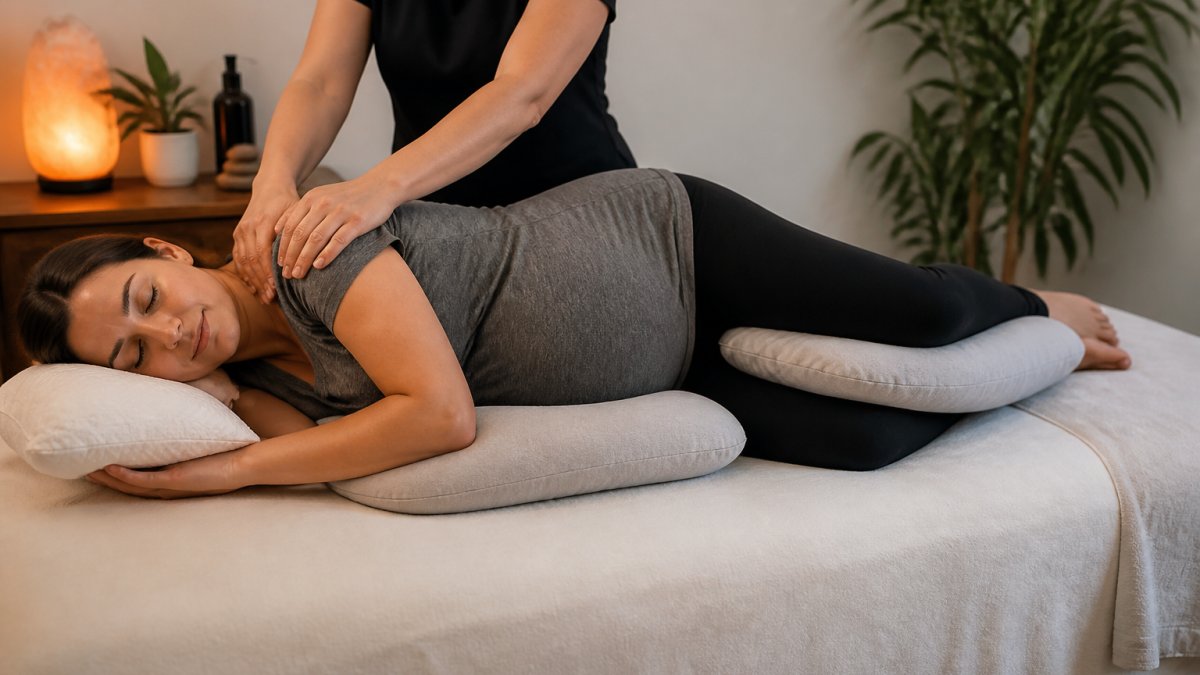
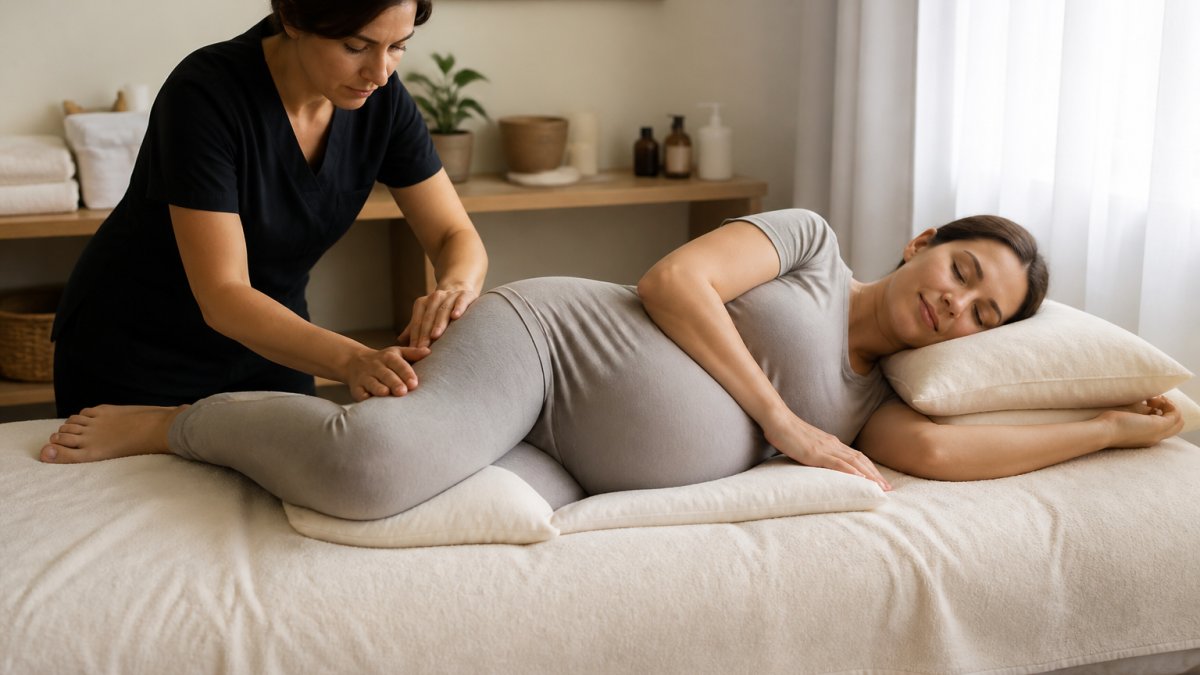
Side-lying position is the gold standard.
Prenatal Massage Pressure Guidelines for Safe Treatment
Pressure is where many non-prenatal therapists go wrong. They're trained to use deep pressure to release muscle tension, but deep pressure during pregnancy can trigger contractions, increase blood pressure, and create complications.
Benefits of Massage for Third Trimester Swelling and Discomfort
By month eight and nine, your body is working hard. Swelling in your feet and hands is common. Lower back pain is nearly universal. Sciatic nerve pain radiates down your leg. Prenatal massage targets these specific discomforts in ways that over-the-counter pain relief can't.
Finding a Certified Prenatal Massage Therapist
Not all massage therapists are trained in prenatal work. Certification in prenatal massage requires specific training, usually 16 to 40 hours of additional coursework beyond basic massage certification, focused on anatomy changes in pregnancy, contraindications, positioning, and safe pressure guidelines.
What to look for:
- Prenatal massage certification from a recognized organization like the National Board of Certification for Animal Acupressure and Massage (NCCAM) or equivalent state-recognized body
- Experience with third trimester clients specifically, ask how many pregnant clients they see monthly and how long they've been doing prenatal work
- Clear protocols for health screening; they should ask detailed questions about your pregnancy, any complications, and your healthcare provider's clearance
- Multiple positioning options and equipment like pregnancy pillows or belly support cushions
- Willingness to communicate with your healthcare provider if needed
Red flags:
- Therapists who claim they can induce labor or "prepare your cervix" through massage
- Those who don't ask about your medical history or pregnancy complications
- Therapists who insist on prone positioning or deep pressure
- Anyone who hasn't received specific prenatal training
What to Expect: Your Third Trimester Prenatal Massage Session
Knowing what happens during your session removes anxiety and helps you relax more fully.
Frequently Asked Questions
Is it safe to get prenatal massage during the third trimester?
Yes, prenatal massage is generally safe during the third trimester when performed by a certified prenatal massage therapist who follows proper safety protocols. Many expectant mothers find it beneficial for managing lower back pain, edema, and sciatic nerve pain. However, you should always consult with your healthcare provider before beginning massage therapy, especially if you have gestational hypertension, preeclampsia, or other pregnancy complications. Your therapist must avoid certain areas and use appropriate pressure to protect both you and your baby.
What are the main prenatal massage contraindications I should know about?
Key prenatal massage contraindications include preeclampsia, gestational hypertension, blood clots, placental abruption, and preterm labor risk. Avoid massage if you have unexplained vaginal bleeding or severe abdominal pain. High-risk pregnancies require clearance from your healthcare provider before treatment. Deep tissue massage should be avoided entirely during pregnancy. Always inform your therapist about your complete medical history so they can adjust the treatment appropriately and ensure your safety.
What positioning is safest for third trimester massage?
Side-lying position is the safest choice for third trimester prenatal massage. Your therapist should support your belly with pillows and place additional support between your knees to maintain spinal alignment. Semi-reclining positions with proper bolstering are also acceptable. Avoid supine positioning, which can cause supine hypotension and reduce blood flow to your baby. A certified prenatal massage therapist will know how to position you for maximum comfort and safety using pregnancy-specific techniques and support tools.
How much pressure is safe during prenatal massage?
Prenatal massage requires gentle to moderate pressure, typically lighter than regular massage. Your therapist should use slow, flowing strokes that support lymphatic drainage and circulation without deep tissue work. Avoid pressure on acupressure points associated with labor induction. Communicate openly with your therapist about comfort levels, pressure should never cause pain or discomfort. A qualified prenatal massage therapist will adjust pressure based on your trimester, specific discomforts, and any pregnancy complications your healthcare provider has noted.
What benefits can I expect from third trimester massage?
Third trimester massage can help reduce edema (swelling) in your legs and feet, relieve sciatic nerve pain and lower back pain, improve circulation and venous return, and reduce overall pregnancy discomfort. Gentle therapeutic touch promotes relaxation and stress reduction, which supports better sleep and hormonal balance. Lymphatic drainage techniques can help manage fluid retention common in late pregnancy. Many expectant mothers report improved mobility and reduced muscle tension. Post-massage hydration is important to support your body's natural detoxification processes.
How do I find a certified prenatal massage therapist?
Look for a massage therapist with specific prenatal certification or training from a recognized program. Ask about their experience with pregnant clients and request references. Verify they understand third trimester safety protocols, contraindications, and pregnancy-specific positioning. Wellness centers that specialize in prenatal care often employ therapists with advanced training in pregnancy-safe techniques and the use of proper support equipment.
What should I do after my prenatal massage session?
Post-massage recovery is important during pregnancy. Drink plenty of water to support lymphatic drainage and help your body process the therapeutic work. Rest for at least 30 minutes after your session if possible. Avoid strenuous activity for the remainder of the day. Some expectant mothers experience mild soreness or increased fluid movement, which typically resolves within 24 hours. If you experience unusual symptoms like contractions, severe pain, or vaginal bleeding, contact your healthcare provider immediately. Your therapist should provide specific post-massage guidance based on your individual needs.
Are there specific areas my therapist should avoid during third trimester massage?
Yes, certain areas require special attention or avoidance during pregnancy. Your therapist should avoid the abdomen entirely and use extreme caution around the lower back and sacrum. Acupressure points associated with labor induction should be avoided. Some practitioners recommend avoiding deep work on the feet, as certain points may stimulate contractions. The inner thigh and groin area require gentle handling. A certified prenatal massage therapist will know exactly which areas to avoid and which can receive gentle, therapeutic touch to support your comfort and safety throughout your third trimester.